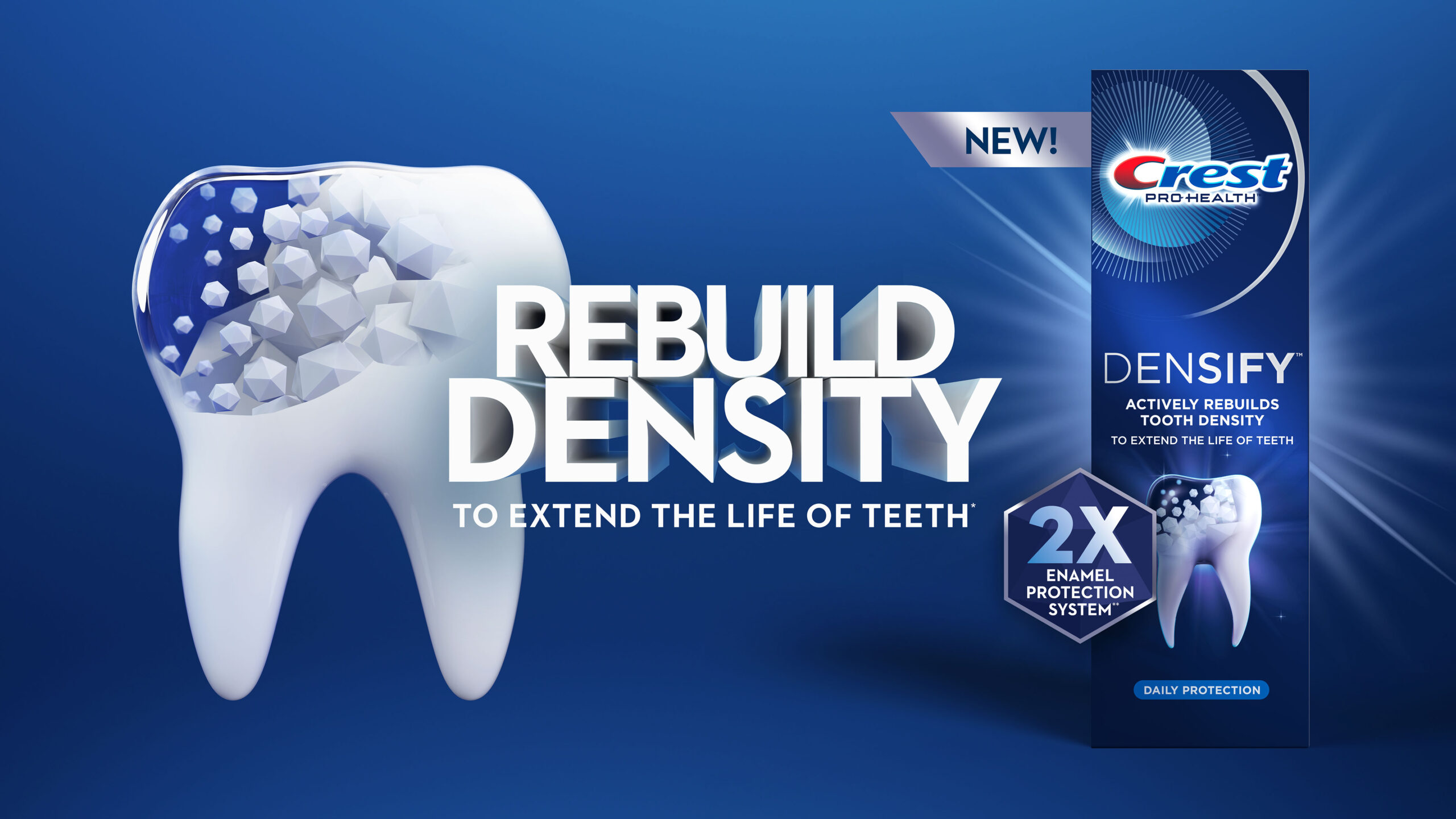
Defining an entirely new category in oral care
Crest Densify set out to define an entirely new space in oral care: tooth densification. In a category where shoppers had grown comfortable—and complacent—with familiar benefits like cavity protection, gum health, tooth sensitivity, and enamel repair, we were tasked with doing more than building awareness. Shoppers needed to understand that beneath the surface of their teeth exists an interior structure they had never been asked to think about—and that Crest had developed a breakthrough capable of rebuilding that structure daily.
CLIENT
P&G / Crest
PROJECT
Product launch
ROLE
Creative Director
Creating a Visual Language for a New Category
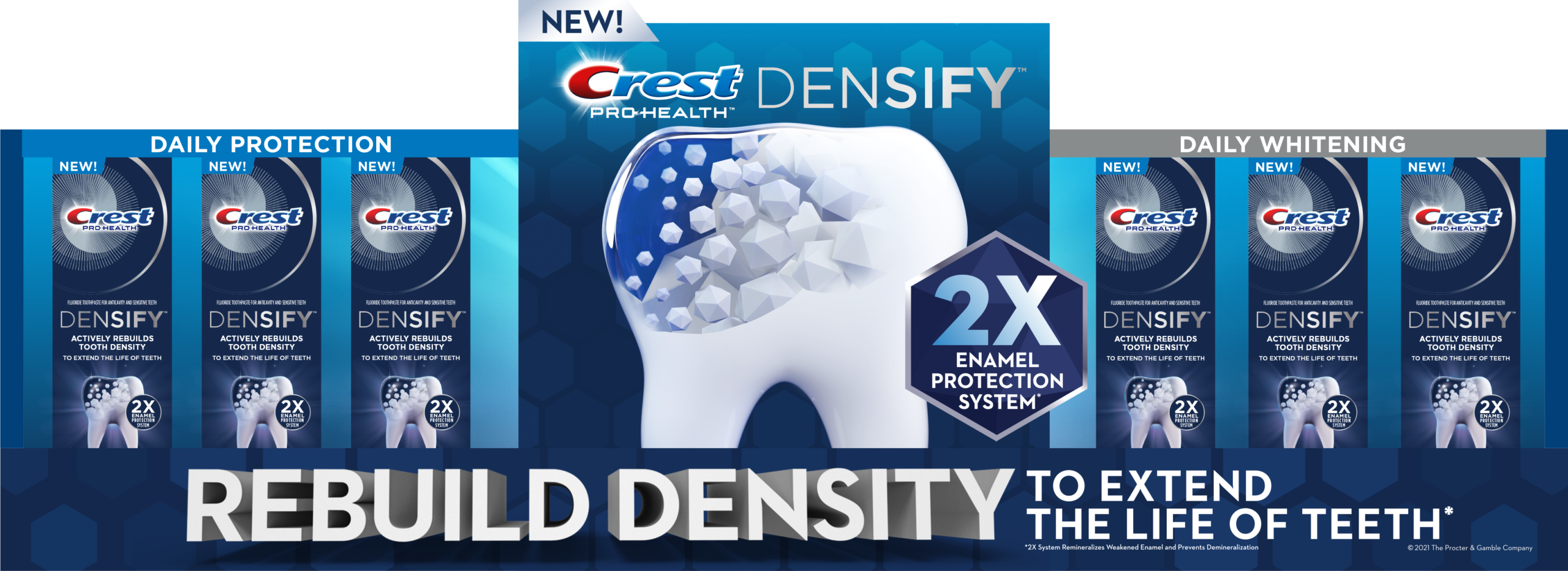
We developed a key visual system designed to make tooth densification visible. Instead of surface-level cleanliness, the work focused on layers, depth, and structural buildup—showing strength forming over time. That language extended into typography, with dimensional type designed to feel weighted and solid, reinforcing density through both form and message.
The key visual was built as a flexible system rather than a fixed image. Its components could be pulled apart and reassembled across touchpoints, allowing the same visual language to adapt from packaging to in-store executions—while remaining instantly recognizable. The result was a system that didn’t just introduce a new category—it gave it shape.
Making the Inside of the Tooth Impossible to Ignore
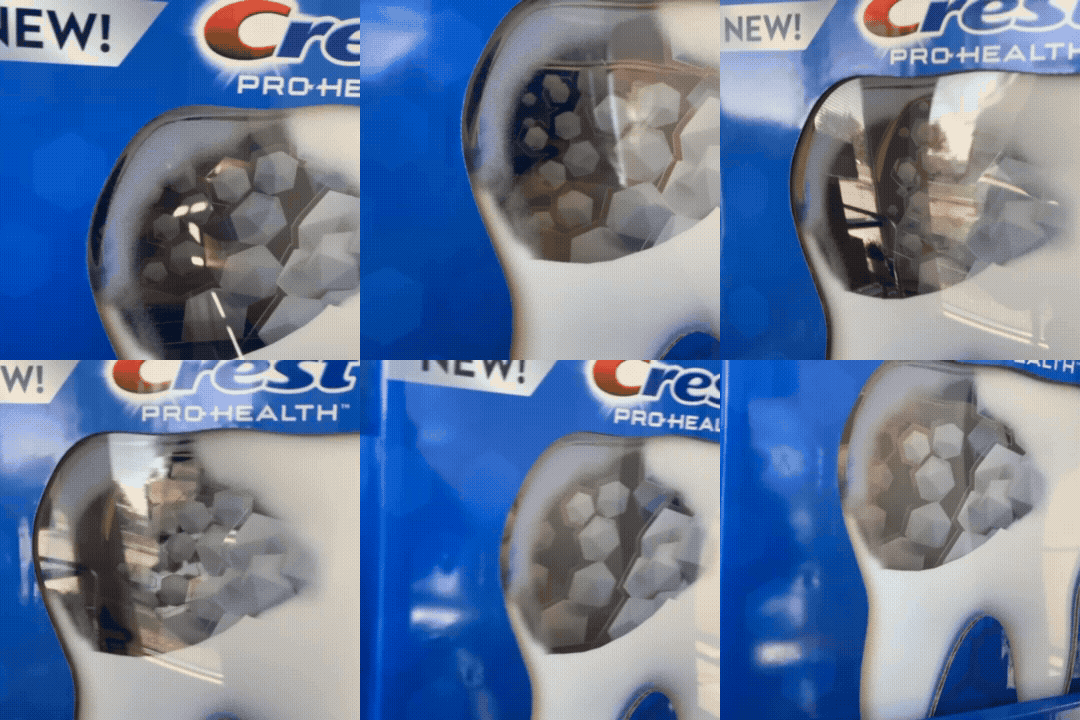
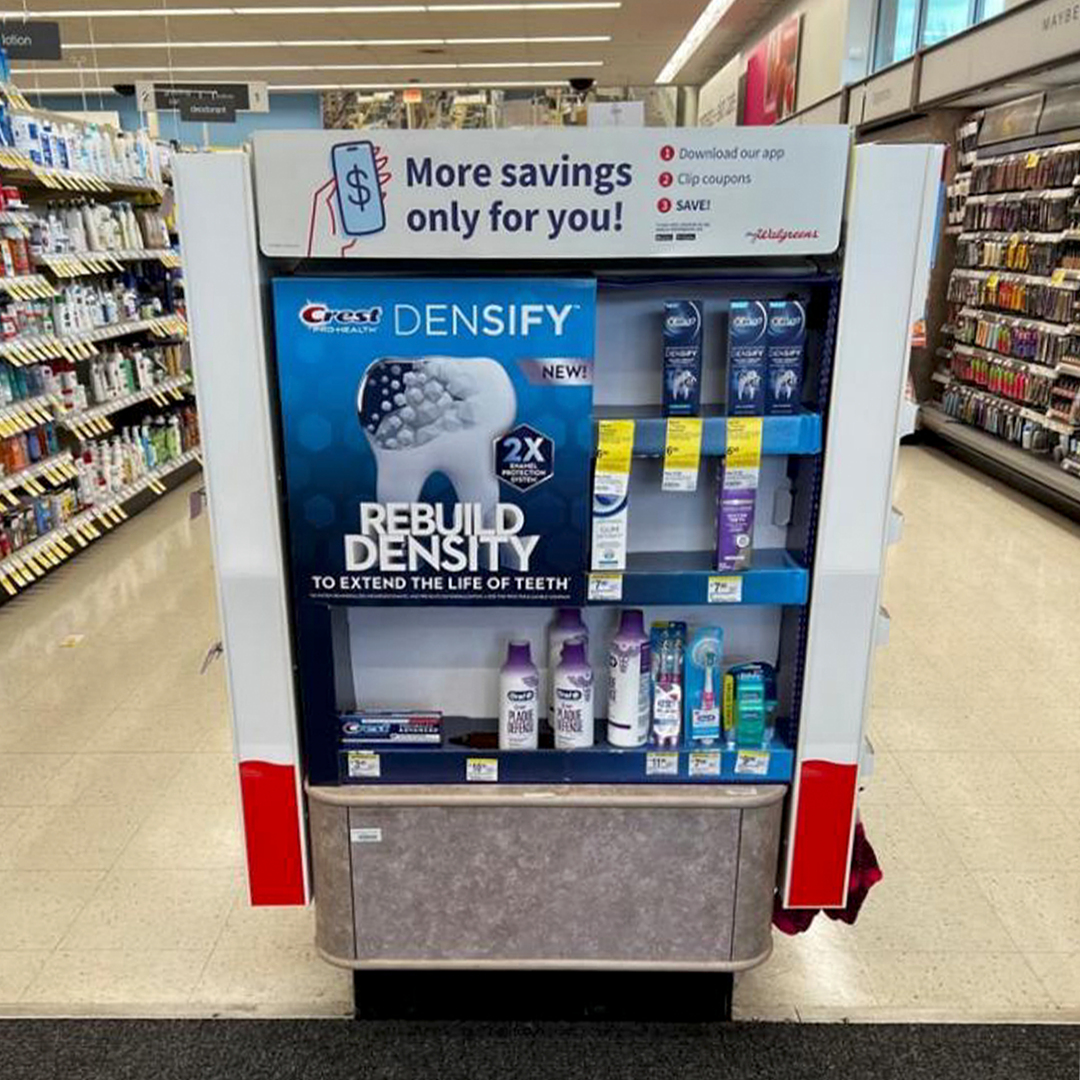
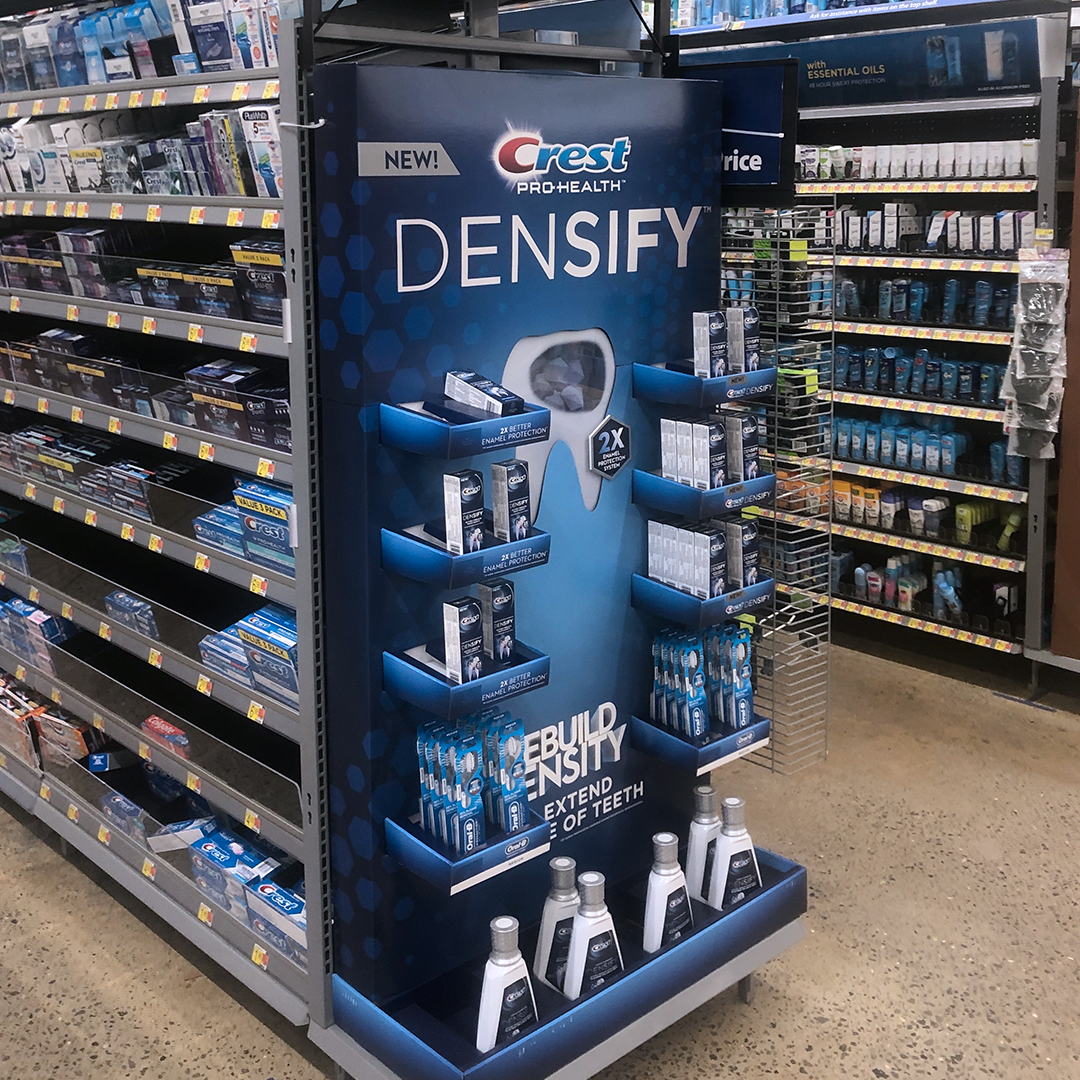
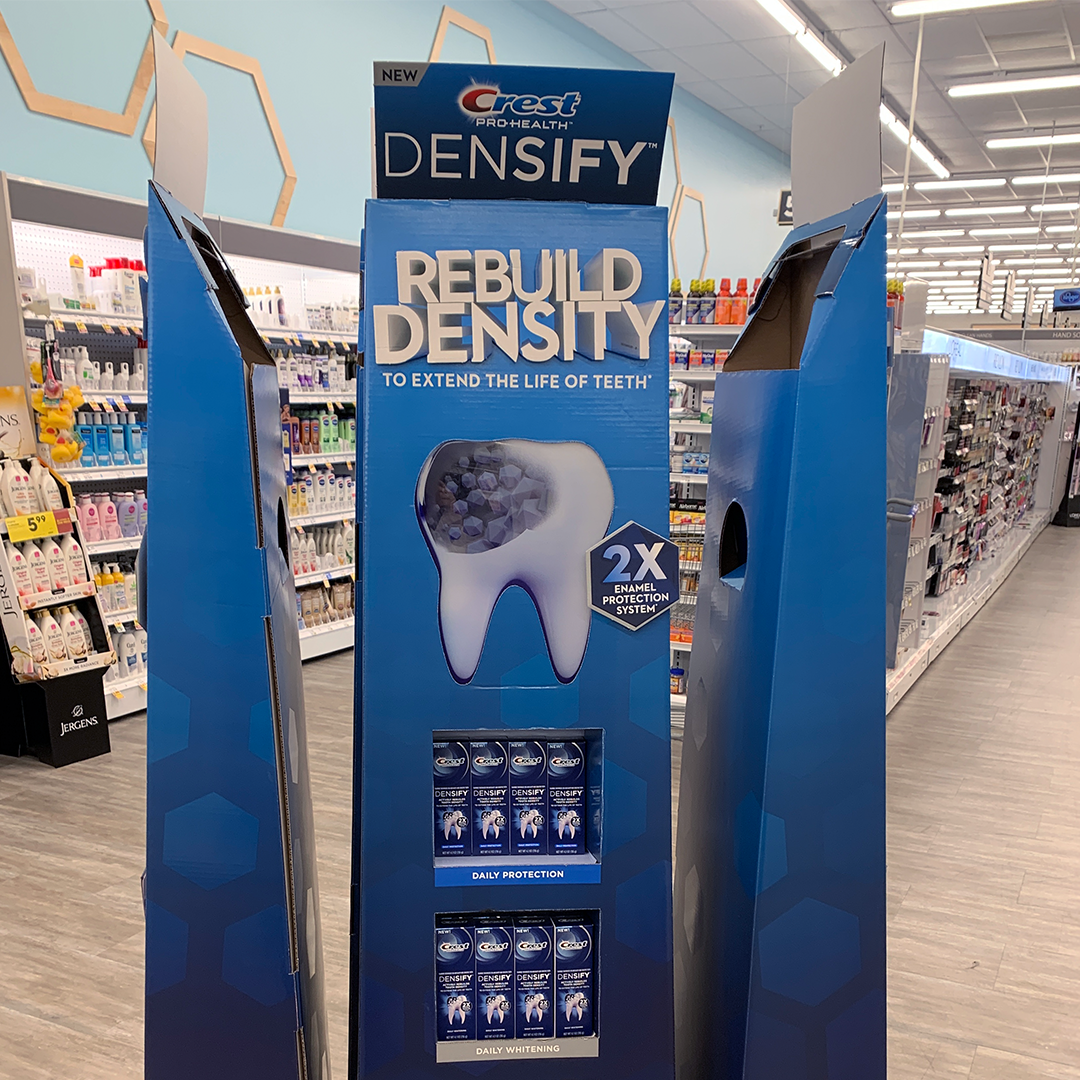
To support the launch at retail, we developed a suite of FMOT tactics designed to stop shoppers in their tracks and spark curiosity. Every execution centered on the same provocation: it’s the interior space of your tooth you’re not thinking about—and that’s where Crest Densify works.
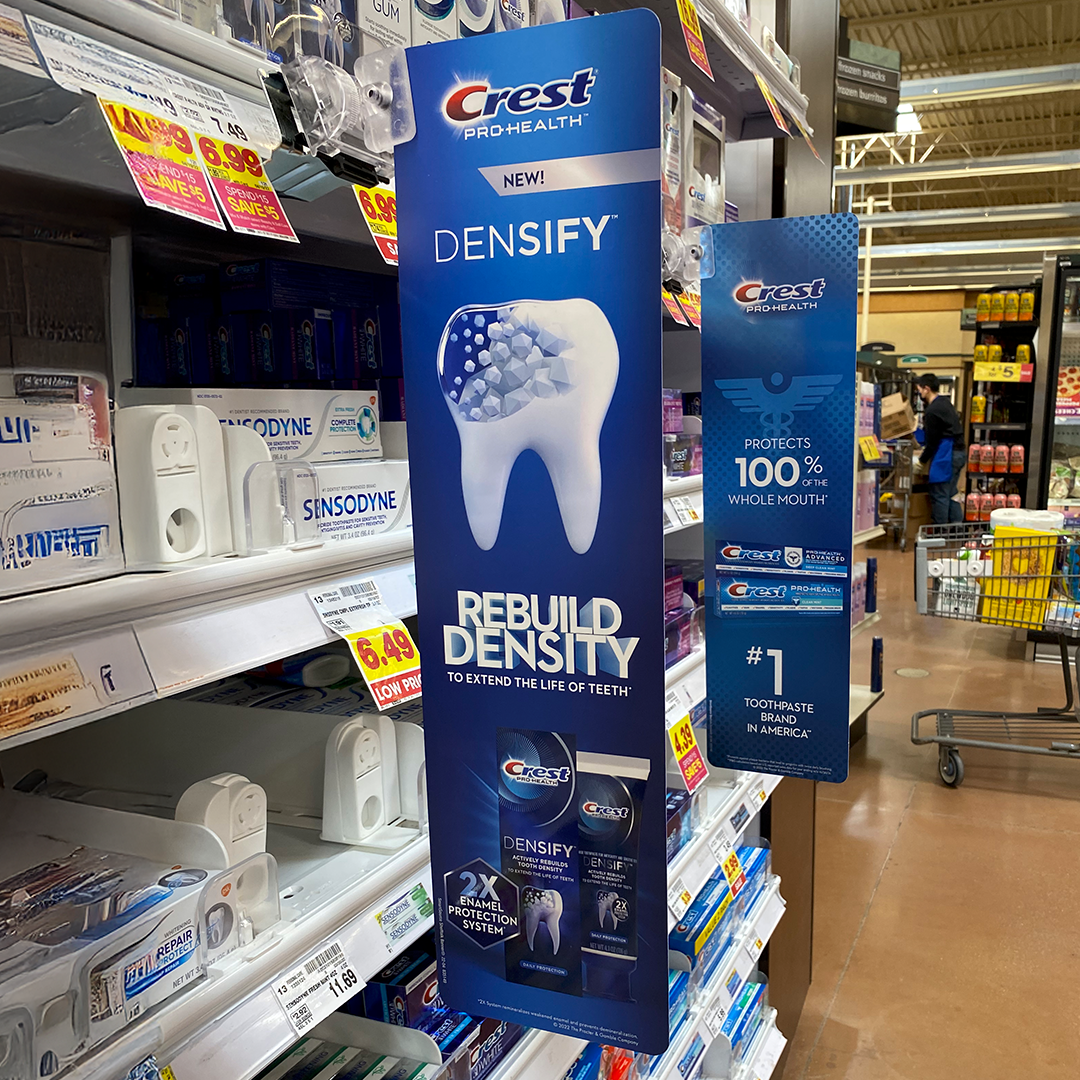
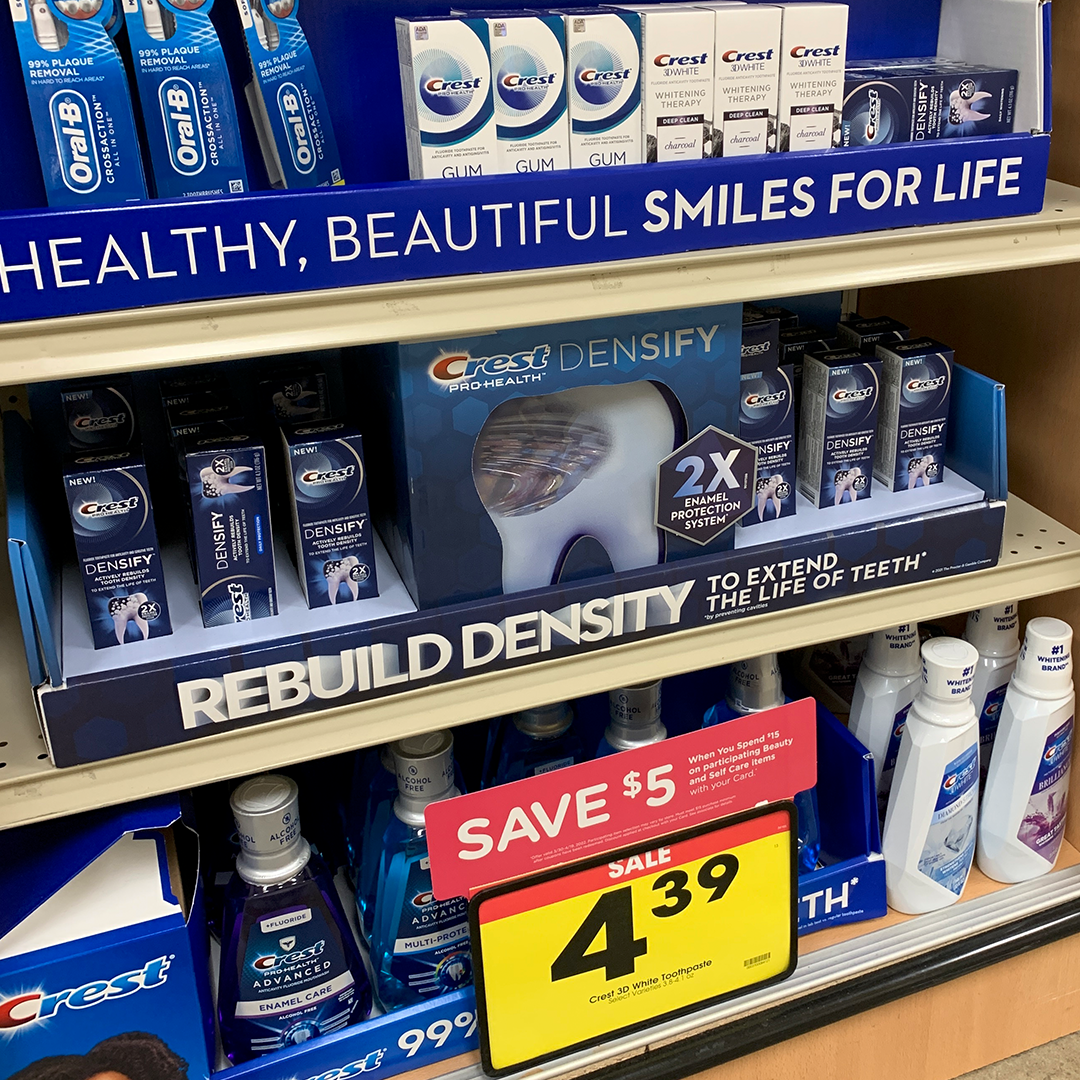
We partnered closely with our production teams to bring that idea to life through truly wow executions. The key visual was transformed into dimensional shadow-box displays, with precise structural openings that allowed overhead retail lighting to illuminate the interior of the tooth. The approach was so compelling that some retailers purchased multiple floor stands to create custom in-store configurations. The system scaled across PDQs, wow endcaps, and floor stands, while smaller retailers engaged through shelf blades that integrated the same design language into existing fixtures.